Despite having lived in London for 10 years now, I always like to keep a close eye on what’s going on in Manchester in terms of new developments and tall buildings, given that as I see it, it’s arguably the UK’s second city (sorry, Birmingham), and since the 1996 Manchester bombing has seen a massive redevelopment and regeneration programme transform the city, including Salford into a world-class destination. It’s also a place that I know and love, with each and every time I make the approach in to Manchester Piccadilly station, a chance to enjoy the constantly evolving city skyline.
Architecturally, Manchester is home to stand-out buildings from almost every conceivable architectural period, from the Victorian splendour of the recently restored Palace Hotel and the neo-gothic Town Hall, to the Edwardian tour de force that is the Midland Hotel, through to the civic architecture of the 1930’s with the Central Library, and the Art Deco brilliance of the Daily Express Building. Post-war is just as exciting, with the neon lights and yellow tiles of the Arndale Tower a personal favourite, the CIS Tower, and more recently, the Ian-Simpson designed, Beetham Tower, which still stands proudly as Manchester’s tallest building, 10 years after it topped out. In between, are hundreds, if not thousands of extraordinary buildings, whether large or small, short or tall, famous or not.
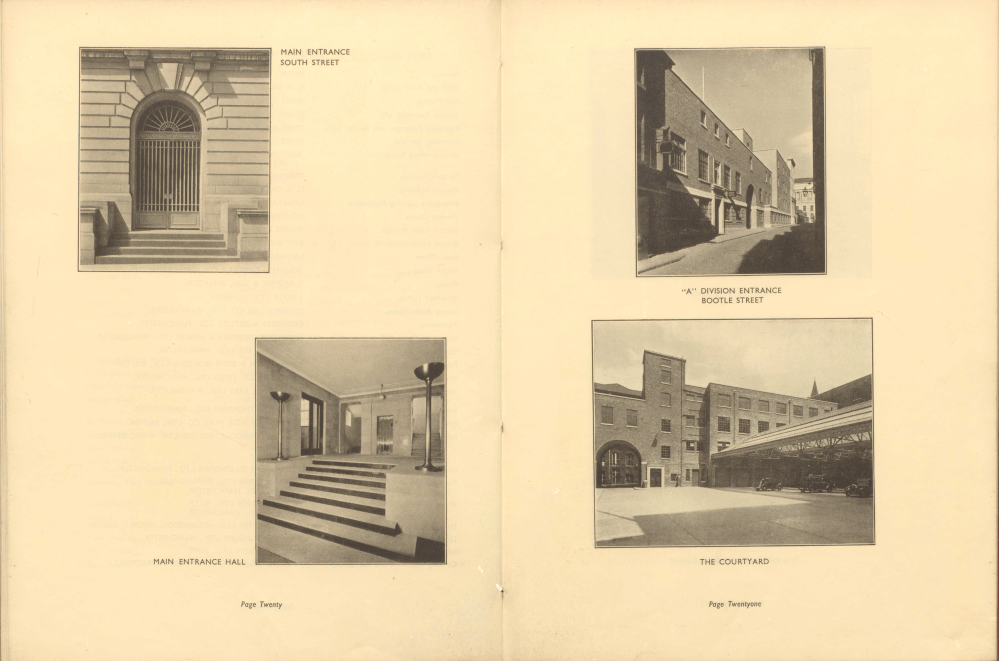
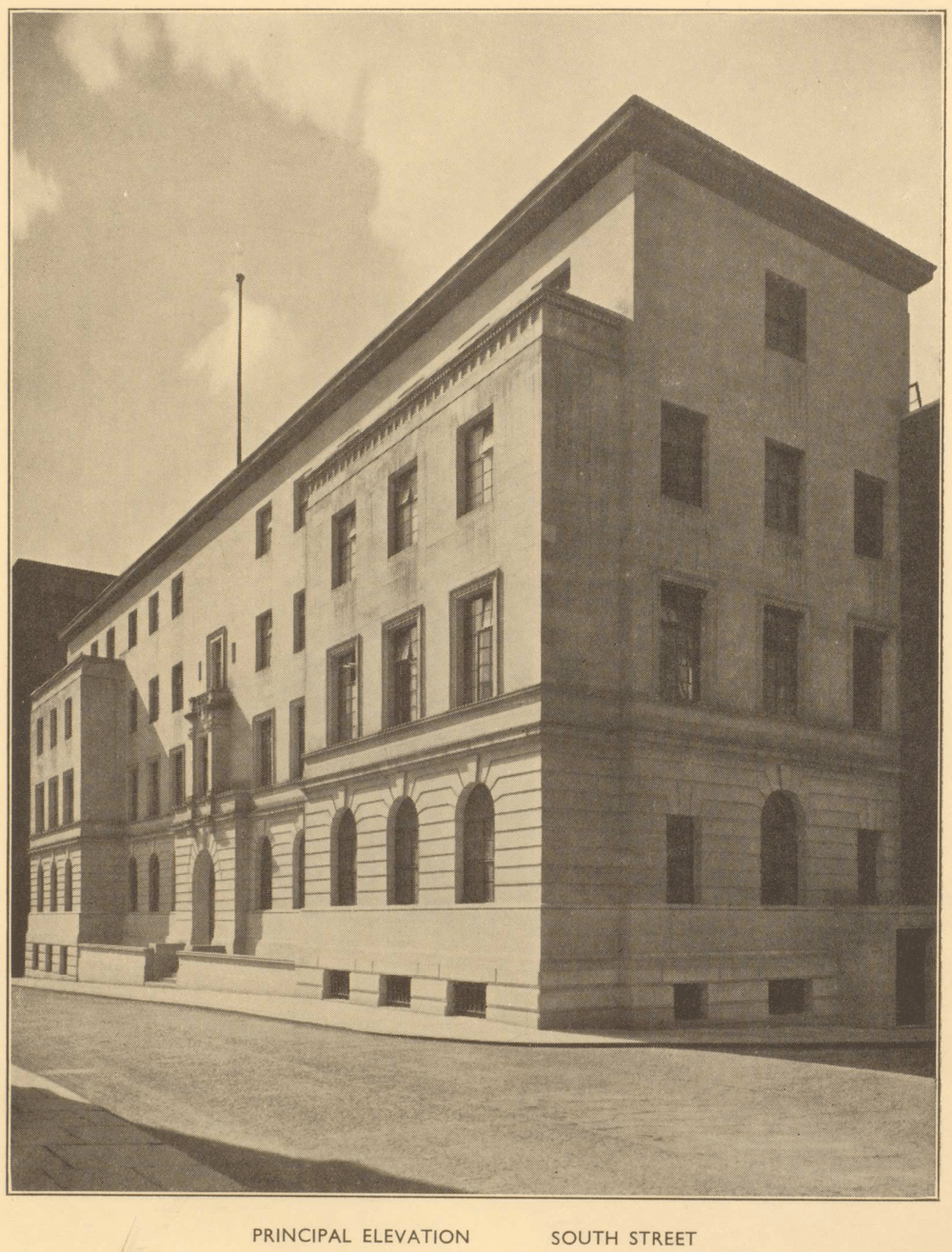
One such building is the former Manchester City Police Headquarters, which fronts on to Southmill Street and closed in 2014, with former Chief Constable, Michael Todd having reportedly told the Manchester Evening News that “Bootle Street police station has not been fit for purpose for a very long time, in fact in it would be far better suited as a set for Life On Mars”. Whilst I’m sure that was a fair and honest appraisal at the time, I can equally believe that both the Palace and the Midland hotels are not how you would build a luxury hotel today, just like the CIS Tower is unlikely to ever offer the same specification to occupiers that No.1 Spinningfields will when it opens next year, however that doesn’t mean that any of them warrant demolition.
Sadly, it still seems far too easy for commercial property developers to wheel out the ‘not fit for purpose’ line as a way of persuading planners to allow buildings to be routinely demolished, and that is the most likely fate for this building, along with both the Manchester Reform Synagogue on Jackson’s Row, and the Sir Ralph Abercromby pub on Bootle Street. All three sites look set to be replaced by the St Michael’s development, a mixed use scheme designed by Ken Shuttleworth’s Make Architects to incorporate twin towers of 21 and 31-storeys, backed by Gary Neville’s Jackson’s Row Developments
In my opinion, the City Police Headquarters is a building of the highest civic order, and one that Manchester should be proud of when its history is considered. For the developers to claim that “it has no great architectural significance” is both entirely misleading, and a huge discredit to the man who designed the building, G. Noel Hill, F.R.I.B.A., M.T.P.I. (City Architect). Having researched him, the 1911 Census of England and Wales shows that George Hill, then 17 years old was born in Wallasey and an architectural student at the Liverpool University School of Architecture, living at home with his parents at 4, Buckingham road, Wallasey, which still stands today. Remarkably, he served throughout the entire First World War as a Private in the King’s Liverpool Regiment, and after post-war spells with the City Architect’s Department at Liverpool and Leicester Corporation Surveyor’s Department, Hill was appointed City Architect of Manchester in 1932.
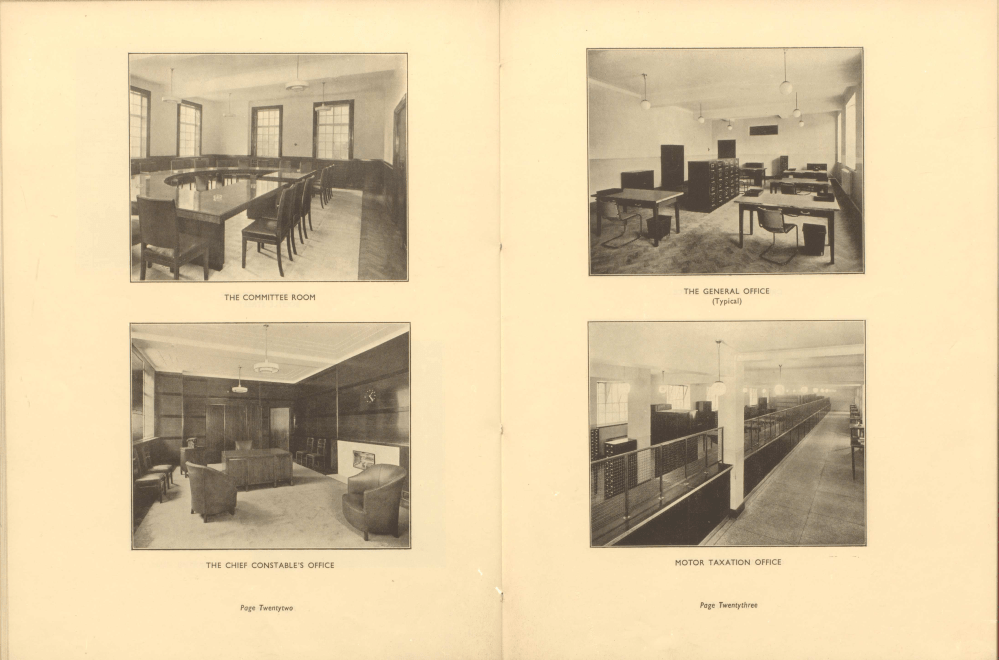
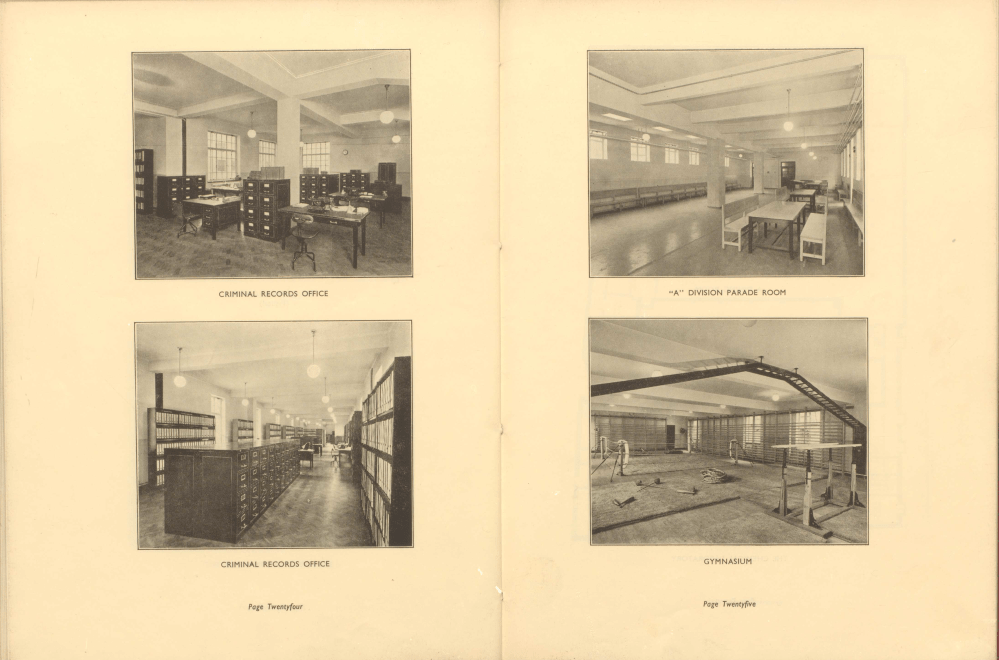
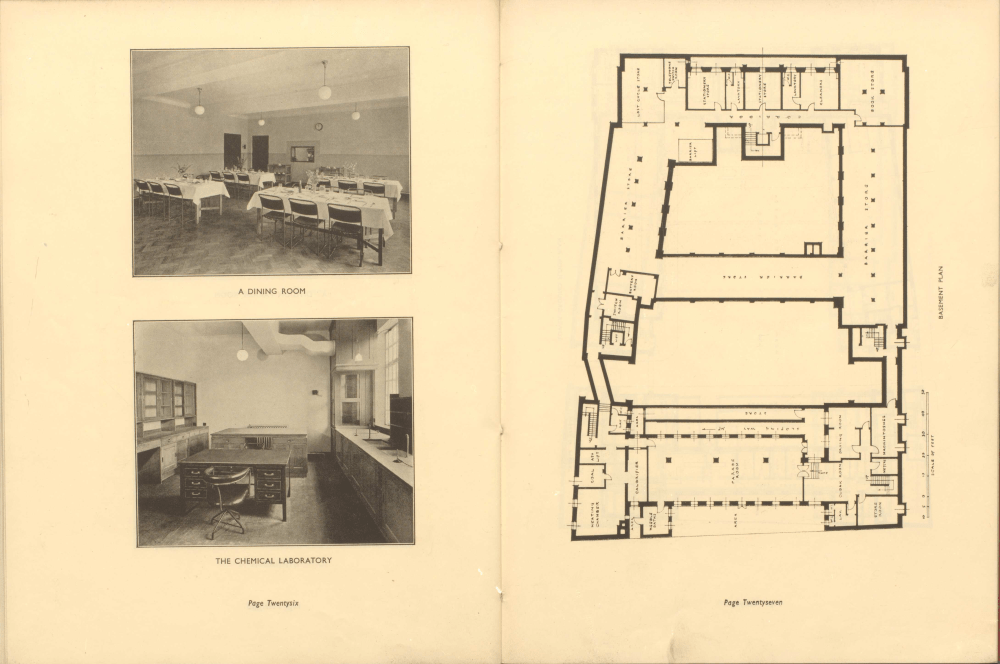
The foundation stone for Hill’s City Police Headquarters was laid on September 6, 1934 (work commenced in July) by Councillor R.A. Larmuth, Chairman of the Watch Committee, and the building was officially opened just three years later on July 16, 1937 by The Rt. Hon. Alderman Joseph Toole, J.P. (The Lord Mayor of Manchester). As the wonderful opening ceremony guide shows, whilst the whole of the building, fittings, furniture, and decorative schemes were designed by the City Architect’s Department, many of its materials were also sourced from firms across Manchester and the North West, with structural steel from Redpath, Brown & Co. Ltd., Manchester, and reinforced concrete floors coming from Bolton & Hayes Ltd., Bolton, to name just two. The building, which was constructed in two phases cost £100,500. Sadly, the original metal windows, supplied by Williams & Williams Ltd., of Chester have been replaced by the usual white U-PVC alternative, which only ever serve to detract from the architectural merit but other than that it’s as it was in 1937.
Walking around those areas of London, and indeed Manchester, that have been redeveloped and regenerated so successfully over the past few years, almost all of them have heritage and historic buildings at their very core – the incredible development around Kings Cross and St Pancras would be all the poorer without the German Gymnasium, the Granary Building and the Great Northern Hotel, all of which have been saved and put back in to use. Spitalfields market in East London is another great example of how new buildings can sit alongside old, as is Manchester’s Exchange Square. I’m all for new developments and tall buildings, but having survived both the Manchester Blitz and post-war redevelopment unscathed, it will be a huge loss to Manchester if the City Police Headquarters is allowed to disappear in to the history books without a trace.

 The New Wipers Times