Living in Palmers Green, North London, I am entirely reliant on Great Northern (GN), part of Govia Thameslink Railway (GTR), to get me to and from work in the City of London each day. Whilst the service of late has been woeful, the excuses are almost always related to the failure of points, signals or track – very rarely, if ever, are the actual trains seemingly at fault, and even when they are, it is usually related to the driver, rather than the units themselves.

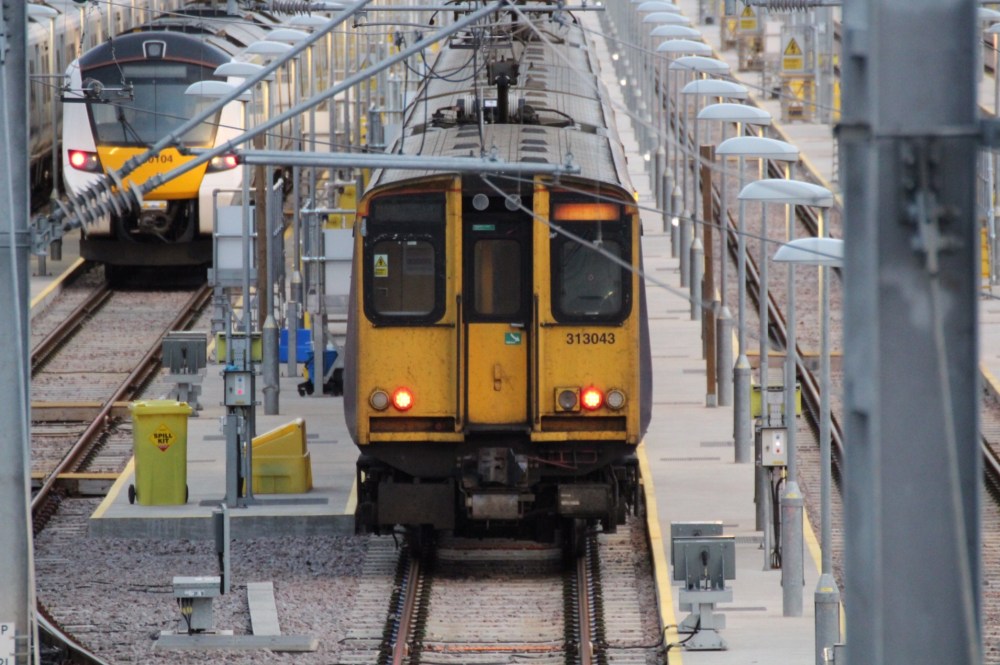
What makes that achievement particularly remarkable is that the current fleet of 44 x three-car trains that serve the GN Route, designated British Rail Class 313, is now more than 40 years old, having originally been built by British Rail Engineering Limited (BREL) at York Works between 1976 and 1977.
The distinctive square profile of the Class 313’s will disappear from this stretch of the railway very soon, however, as a brand-new fleet of 25 trains continues to arrive from Krefeld, Germany, as part of a £200m order for 150 carriages, awarded to Siemens by Rock Rail Moorgate, a joint venture between Rock Rail Holdings and Aberdeen Standard Investments, who will lease the trains to GN.

Part of Siemens’ successful Desiro City family, the new fleet has been given the designation, British Rail Class 717 and are, in effect a modified ‘metro’ version of both the Class 700’s already in service on the Thameslink route, and the Class 707’s, ordered by South West Trains but soon to be surplus to requirements under the new franchisee, South Western Railway.
Upon leaving the Krefeld assembly line, each train is first sent to Siemens’ test track in Wildenrath, Germany, before making its way through the Channel Tunnel to the UK. Several of the new fixed-length, six-car train sets have already arrived in the UK, and can be seen from passing trains, standing at either Ferme Park Sidings, or within Hornsey Depot, where they will be maintained.
The rest of the order will continue to be delivered by GB Railfreight (GBRf), who have typically brought the trains up to London from Dollands Moor overnight in pairs. With space at a premium, testing is already taking place, outside of the peak between Moorgate and Gordon Hill, whilst on 28th September, 717007 carried passengers for the first time on the same route.

Externally, the GN trains will look almost identical to the Thameslink units, with the same light grey livery with pastel blue doors and a white diagonal flash at the carriage ends. The principal design difference between the Class 717 and it’s Desiro City siblings, however relates to the cab ends, with the GN trains required to provide emergency access, given that they will operate in the Northern City Line tunnels between Drayton Park and Moorgate.
A means of escape is provided by a centrally positioned door at each end, which opens to automatically unfold a set of metal steps- a far cry from the wooden ladders of the 313’s. With new regulations now in place, however, the 717’s will not require the same yellow warning panels at the end of each train that were mandated for the Class 700’s.

Internally, there will be no toilets, and whilst 2+2 seating will create more room, it will leave more passengers standing vs. the 313’s, which feature 3+2 seats. The new trains will be fully air conditioned, courtesy of Liebherr units, as well as providing real-time passenger information screens, free WiFi and power sockets, none of which the current trains can offer.

Whilst most passengers will not care where the new trains are manufactured, in many ways, it is a sorry state of affairs that trains designed, engineered and built in Britain are being replaced with those from Germany, regardless of the fact that certain components are sourced from the UK.
Siemens’ own manufacturing facility in Hebburn, South Tyneside, supplies a number of critical subassemblies, as they did for the Class 700 Thameslink programme. Elsewhere, of the larger components, Couplers come from Dellner, Shoegear and Pantographs from Brecknell Willis, Brakes from Knorr Bremse, and Wheelsets from Lucchini, all in the UK. Suffice to say, the new trains wouldn’t get very far without their UK content, yet those same suppliers all work with Bombardier also.
Whilst GN won’t be drawn in to giving a specific date for the trains to enter in to full passenger service, a politically sensible,, yet frustrating decision, the aim is to have all 25 of them in traffic by spring 2019, serving the inner suburban routes between Moorgate and Stevenage, Hertford North and Welwyn Garden City.
The Class 313’s will almost certainly be sent for scrap, which has been the fate of the sister, Class 315 trains that have been in operation with London Overground on routes in and out of London Liverpool Street, yet are now being replaced themselves with Class 345, Bombardier AVENTRA units, manufactured in Derby.

Whether any of the trains are saved remains to be seen, yet by this time next year, they will be a distant memory on the GN railway – best therefore to catch them on the network, whilst you still can.
November, 2018.
 The New Wipers Times