Standing at 24, Upper Woburn Place, W.C.1., ‘Endsleigh Court’ was one of the many new blocks of flats to be built in London during the interwar years.
As the great landowning families reduced their estates and sold off parcels of land, developers rushed to meet the demand for purpose-built flats that boasted all the latest modern conveniences, or ‘mod-cons’, with new blocks springing up in every area of the capital.
In the case of ‘Endsleigh Court’, it was the Duke of Bedford that had sold the long leasehold on the site, with The Bedford Estates maintaining the freehold.
Whilst some of the blocks built during the period have been lost entirely, whether to war damage or post-war redevelopment, and others have been scarred by subsequent alterations, many still stand in close to their original form, and are often either listed buildings or local landmarks, highly sought after by buyers.
Many of the blocks, particularly those of the 1930’s, are often described as being ‘Art Deco’ in their styling, although the strength of design and level of architectural detailing varies wildly. At ‘Endsleigh Court’, the building is of a relatively simple, more traditional design with little to draw the eye beyond its imposing scale.
It’s appeal to buyers looking for a bolt hole up in town, was therefore more likely to be the interior comforts and service model, on which great emphasis was placed by the developer.

The new nine-storey building was designed by the already established architectural partnership of Richardson and Gill, who had offices at nearby 42, Russell Square, a Georgian town house that still stands today.
Whilst not specialising solely in blocks of flats, the firm would go on to design several notable buildings in the immediate area, including both the ‘County’ and ‘Tavistock’ hotels for Imperial Hotels London, Ltd.
Plans were submitted in early December, 1933 before approval was given by the London County Council (L.C.C.) on the 22nd. At the request of The Bedford Estates, amendments were made so as to ensure that all floors could be used for the dual purpose of either flats and/or offices.
Construction of the new block was the responsibility of Richard Costain, Ltd., acting as general contractors. Having been founded in Liverpool in 1865, Costain’s London office in the 1930’s was, by coincidence, almost adjacent to ‘Endsleigh Court’, at 18, Upper Woburn Place.
By January, 1934, excavation works for the foundations had commenced, with the steel contract about to be placed. Costain awarded this to Banister, Walton & Co., structural steel experts, whose tag line at the time was ‘We build in steel’.
By April, the steelwork, which came from the company’s works at Trafford Park, Manchester had already reached the second floor, with construction completed by the end of the year. Costain still exists today, and are listed on the London Stock Exchange as Costain Group PLC.
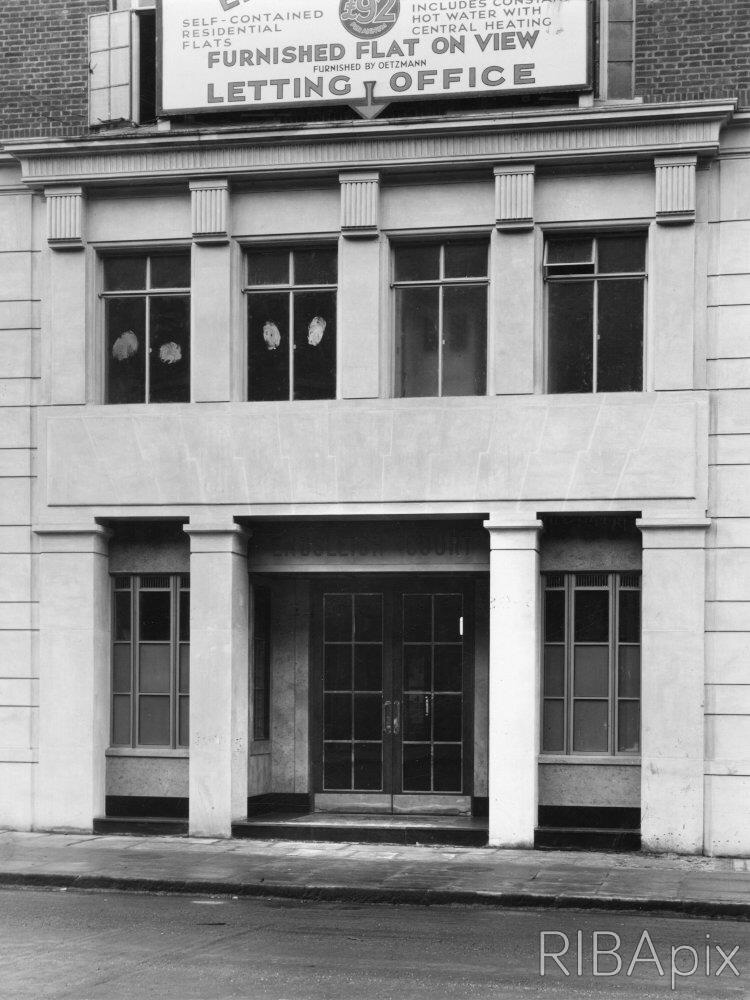
The first advert for the building was placed in ‘The Times’ on 5th December, 1934, which proudly claimed the new development to be “London’s most central luxury flats”, located midway between the City and West End.
Prices started from £92 per annum inclusive, with the only additional expense for residents that of electricity, which was provided by St. Pancras Borough Council. A finished show flat was open daily until 8pm, along with the letting office.
Flats were clearly aimed at affluent buyers, with further adverts in the February and March, 1935 issues of ‘The Tatler’ showcasing ‘Endsleigh Court’ as representing “the best of Modern Flats.”
There were eight different flat types of various layout and size available to buyers, the smallest of which were priced between £92 and £102, depending on floor level.
The smallest ‘studio’ flats were centred around a living room with bed recess measuring just 7’ x 3’6”, or large enough to accommodate a single bed, underlining the advertisement claims that “these flats are easily run by bachelor businessmen.”
Larger ‘homely’ flats aimed at “married people” featured separate bedrooms and in some cases, a balcony, with the most expensive, ‘Wareham Suite’, costing between £162 and £177.
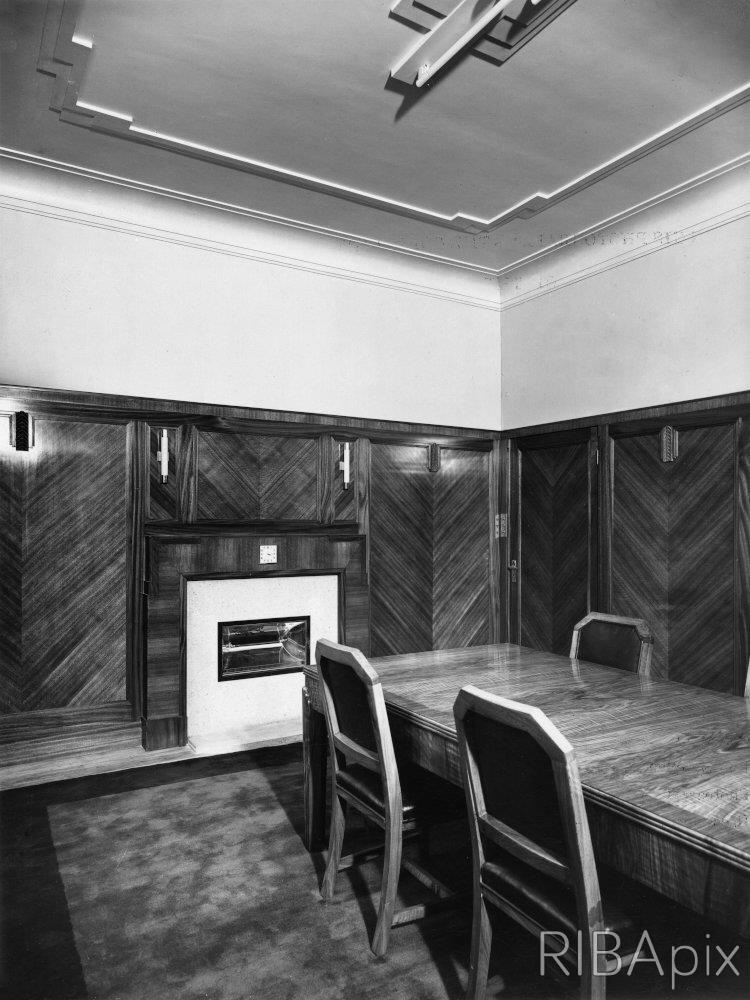
‘Endsleigh Court’ was designed around the concept of the serviced apartment, with each of the self-contained residential flats able to call on a staff of cleaners.
Every suite, regardless of size, featured constant hot water with all electric central heating, whilst bathroom suites were of coloured porcelain with chromium fittings.
The fitted kitchens (or kitchenettes in the smaller flats), supplied by the Peerless Kitchen Cabinet Co., Ltd., of Greenford, Middlesex, featured electric cookers and kettles, whilst every flat had an electric panel fireplace in the living room.
Whilst none of this may sound revolutionary, relative to London’s latest luxury apartment blocks, in the mid 1930’s, it represented the very latest technology.

For the interiors, the flats were furnished by Oetzmann & Co. Ltd., an established home furnishing and furniture specialists who had their main premises at nearby 67-87, Hampstead Road, N.W.1., and a branch at 125, Tottenham Court Road, W.C.1., both of which have, long since been demolished. As was popular at the time, walnut furniture featured extensively.
Having stood for some 83 years, ‘Endsleigh Court’ looks remarkably similar today, to how it did upon completion in 1935. The building still has its original Crittall windows, ensuring a cohesive main elevation on to Upper Woburn Place.
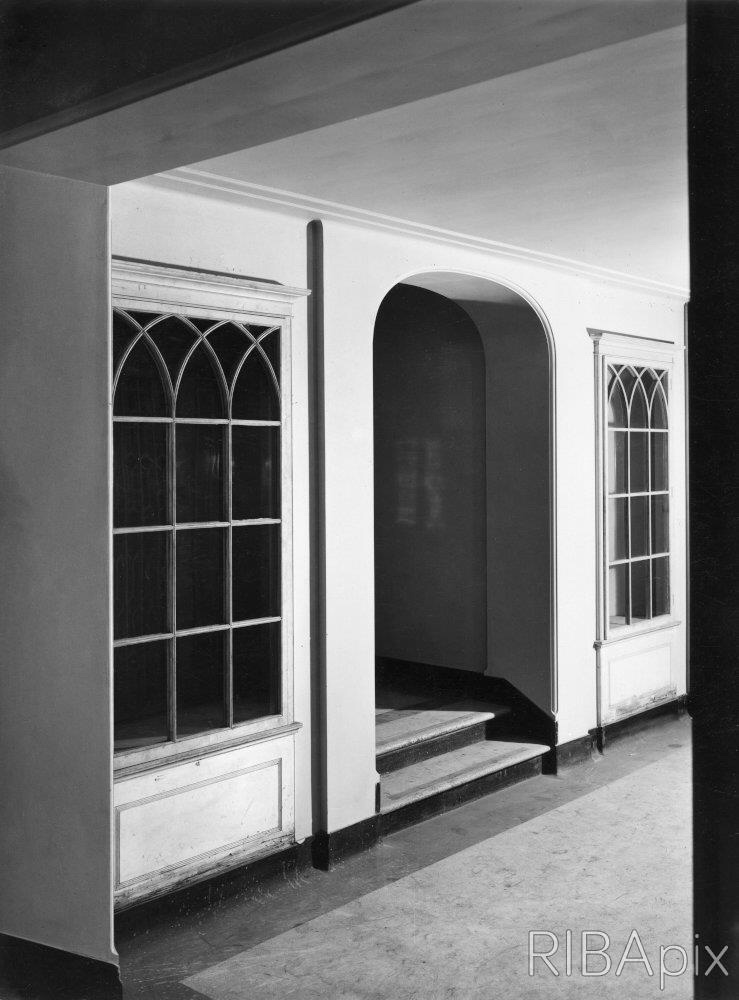
Internally, whilst the communal areas have been sympathetically refreshed of late, respecting the original style, many of the individual flats have been completely remodelled, losing any trace of their original interiors.
Whilst not a listed building, ‘Endsleigh Court’ does sit within sub area six of Camden’s ‘Bloomsbury Conservation Area’, yet it is not specifically singled out by the Council as being a ‘Positive Building’.
Whilst no such plans exist, it’s long-term future is therefore not guaranteed from redevelopment. It is my own view, however, that ‘Endsleigh Court’ does, in fact, make a positive contribution to the immediate area, and I hope that blog posts such as this will persuade others to agree.
January, 2019.
 The New Wipers Times
As a visitor to London I appreciate that buildings such as this still stand and are used today. I actually stayed at Ensleigh Court and found your article wonderful. London you have architectural treasures, please dont tear them down in the name of progress.
LikeLiked by 1 person