Still standing at 121-123, Camden High Street, N.W.1., are the former premises of Montague Burton, Ltd., the Leeds-based tailoring firm. Whilst no longer occupied by Burton, the ‘Art Deco’ building still speaks to the chain’s original design language, despite the fact that many of the most prominent architectural features, including the familiar granite foundation stones, original shopfront and signage have all been lost over the years.
Without the foundation stones or access to the Burton archives, an exact date remains elusive as to when the store was either built or subsequently opened, however it was likely designed in the late 1930’s, under the direction of Burton’s then Chief Architect, Nathaniel Martin, given similarities to other new stores from the era, such as Hanley (1938) in Staffordshire, which features the same terracotta facings and pilasters. Other design clues are the geometric frieze patterns on the principal High Street elevation, which are identical to those at Palmers Green (1938) and Southgate (1938), both in north London.
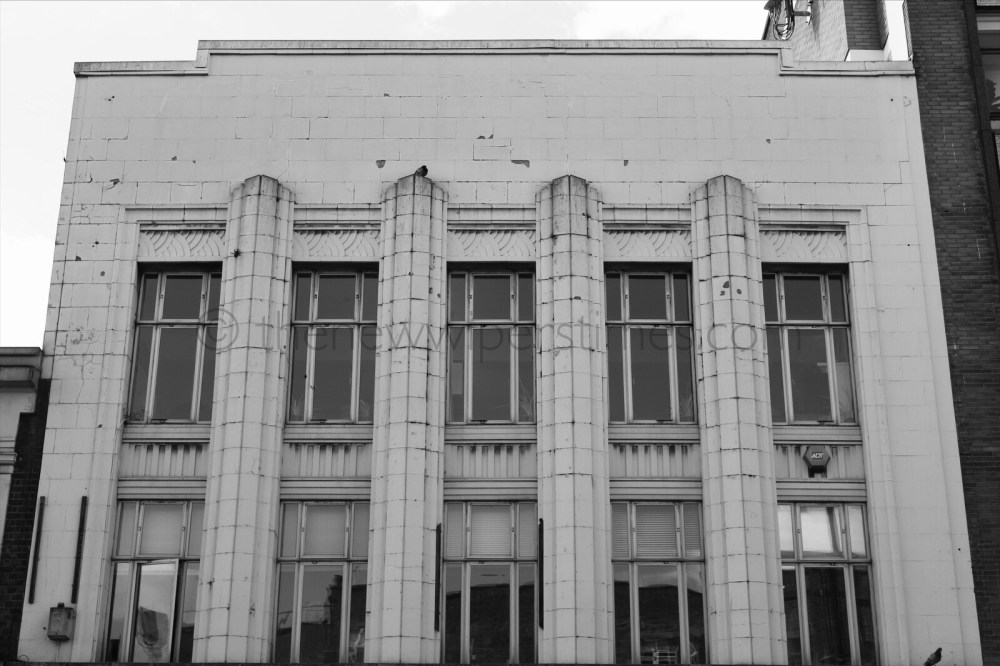
With five architectural bays, the three-storey building is relatively modest in size when compared to larger stores of the era such as Brentwood (1939) and Forest Gate (1939), with Burton having seemingly been unable to secure a more prominent corner site at Camden Town. These were typically preferred by the company, so as to maximise the amount of available window space, in order to showcase the firm’s suits.
The original shopfront survived through to the 1960’s, at which point Burton embarked on an extensive modernisation programme across its stores. In 1965, the Burton Architects Department drew up plans for the remodelled Camden Town store, which saw significant alterations to both the interior and exterior, with a planning application submitted to the London Borough of Camden in March, 1966, that was subsequently approved in April.
Inside, the original wood block flooring was replaced by asphalt, covered with linoleum from specialists, Barry & Staines, Ltd., whilst 12” x 12” precast terrazzo tiles of a black, white and cream design were used in the new entrance lobby. Outside, anodised silver aluminium window frames were installed with ¼” polished plate glass replacing the firm’s decorative ‘Windows of Merit’, whilst the emerald pearl granite fascia above was lost to grey and charcoal tiles.
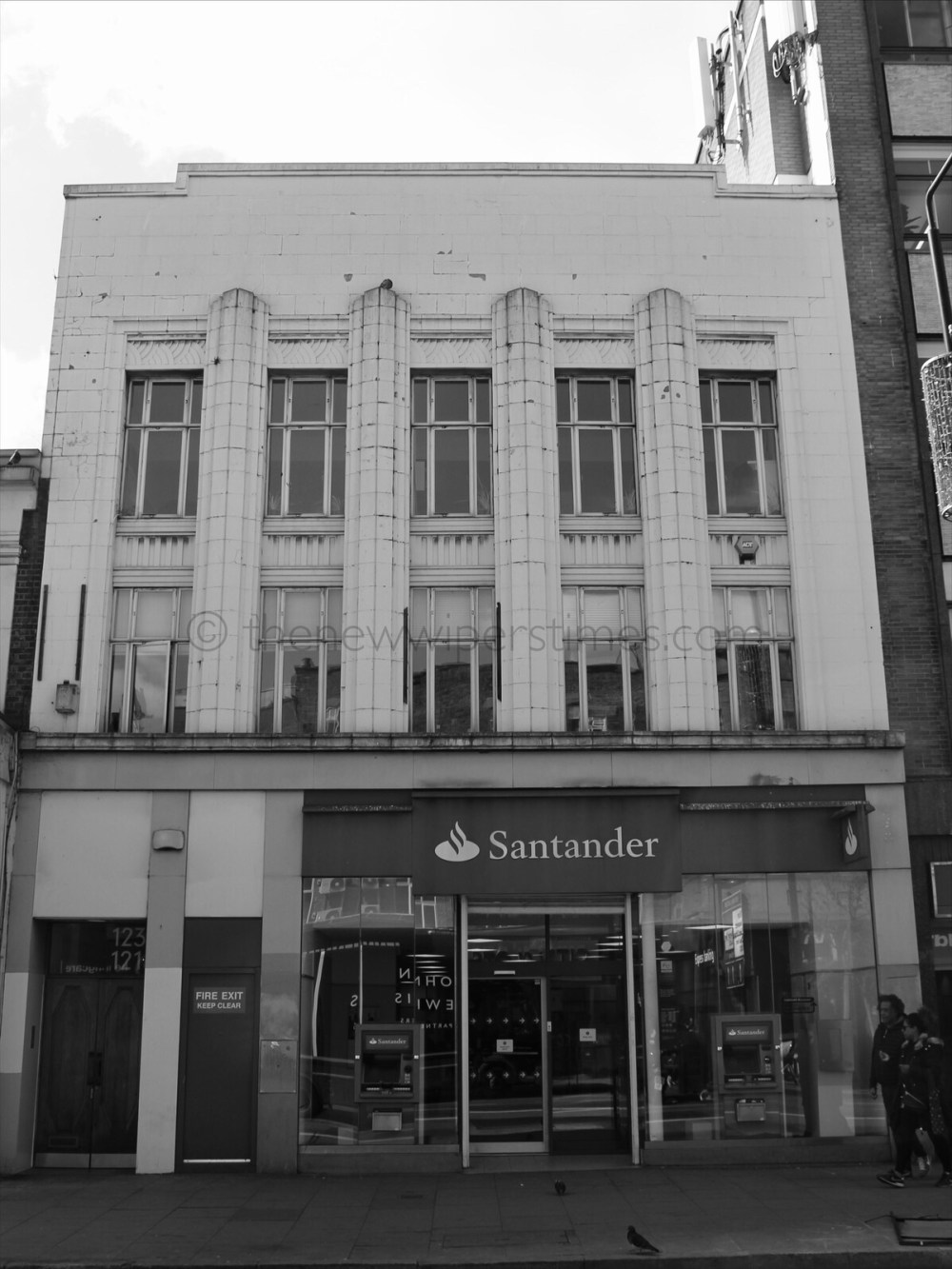
By 1977 however, Burton had vacated the Camden Town site, which was subsequently taken over by the now defunct British Shoe Corporation (B.S.C.). The Leicester-based company tasked their own Chief Architect, John A. Metcalf, A.R.I.B.A., to draw up plans for another new shopfront and interior for the firm’s ‘Manfield’ brand, part of the subsidiary, S.C. Footwear, Ltd.
In 1994, the store changed hands again and became a branch of the building society, Abbey National plc, who also embarked upon a fourth and final remodelling, which is essentially what exists today, save for the sign above the door, which now says Santander, following the Spanish bank’s takeover of Abbey in 2004. On 23 January, 2019, however, Santander announced changes to its UK branch network, which will see the closure of 140 branches, all by the end of the year and whilst Camden High Street was not on the list, it’s future remains far from certain.
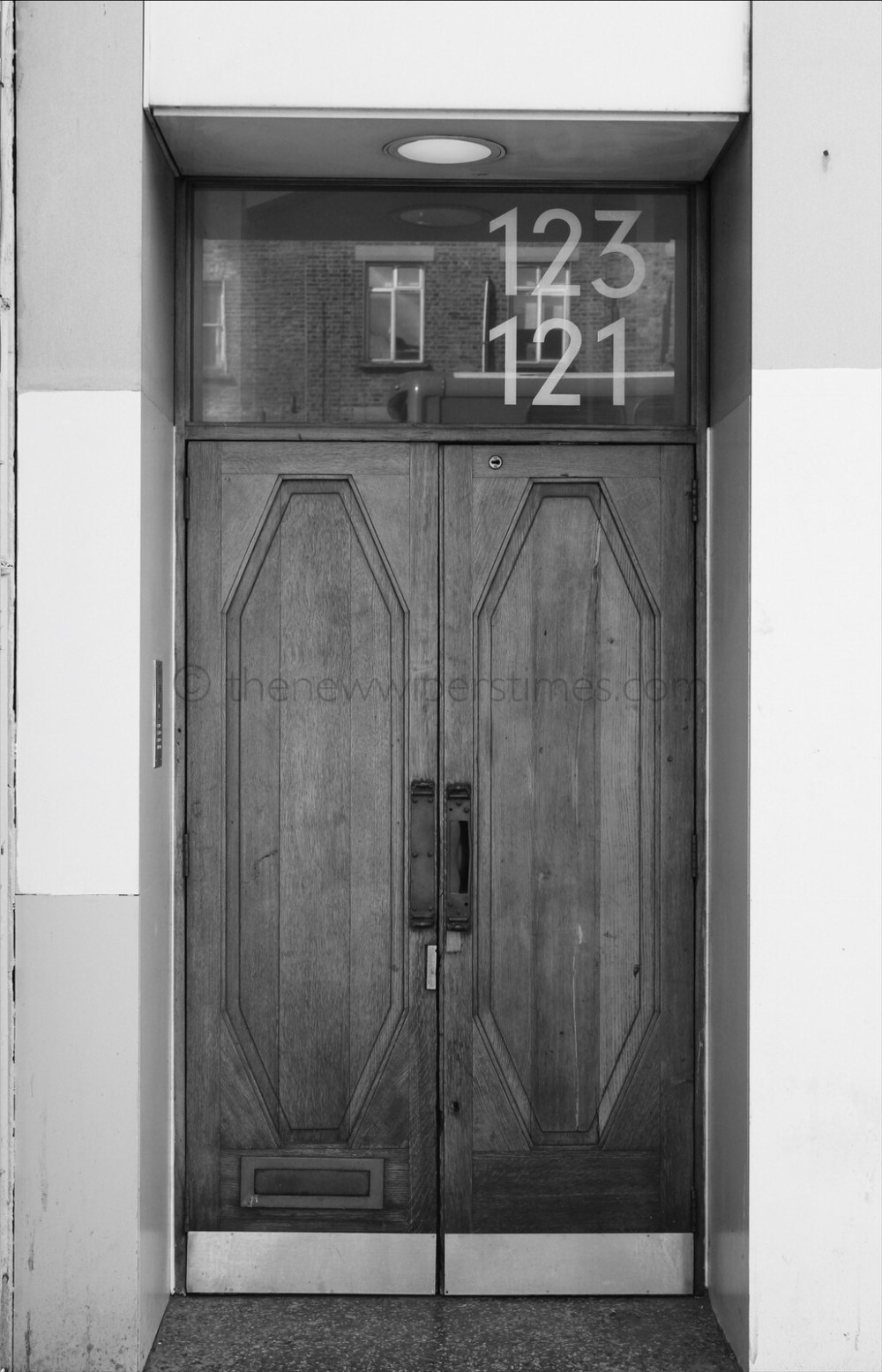
The sole surviving period features at street level, which reveal that this was once a Burton store, are the pair of wooden doors to the left hand side of the main entrance that provide access to the upper floors of the three-storey building, which previously housed a dance and pool hall, but are now occupied by the architectural practice, MICA. With their elongated hexagonal design, the solid oak doors were often referred to as ‘coffin’ doors and can still be seen across the former store base.
Despite the various changes to the ground floor, externally the upper storeys remain almost as they did when the building was completed. The original metal windows have been lost, but like with Forest Gate, their replacements are sympathetic to the original design. Sadly, the white terracotta facing stones, which dominate the principal High Street elevation, and were likely sourced from the Middleton Fireclay Co., Leeds, are now in a particularly poor condition however, whilst the original signage from Franco Signs has long since been removed.
Whatever becomes of the former ground floor selling space, the building itself at 121-123, Camden High Street now sits within the Camden Town Conservation Area and has been designated as a positive building, affording it some protection from demolition, which although not impossible would require specific justification. Hopefully, with an eventual new occupier, will come an opportunity to repair and restore the main elevation to something like its original splendour, ensuring that the building can indeed continue to make a positive contribution to the conservation area.
May, 2019.
 The New Wipers Times
One Comment Add yours