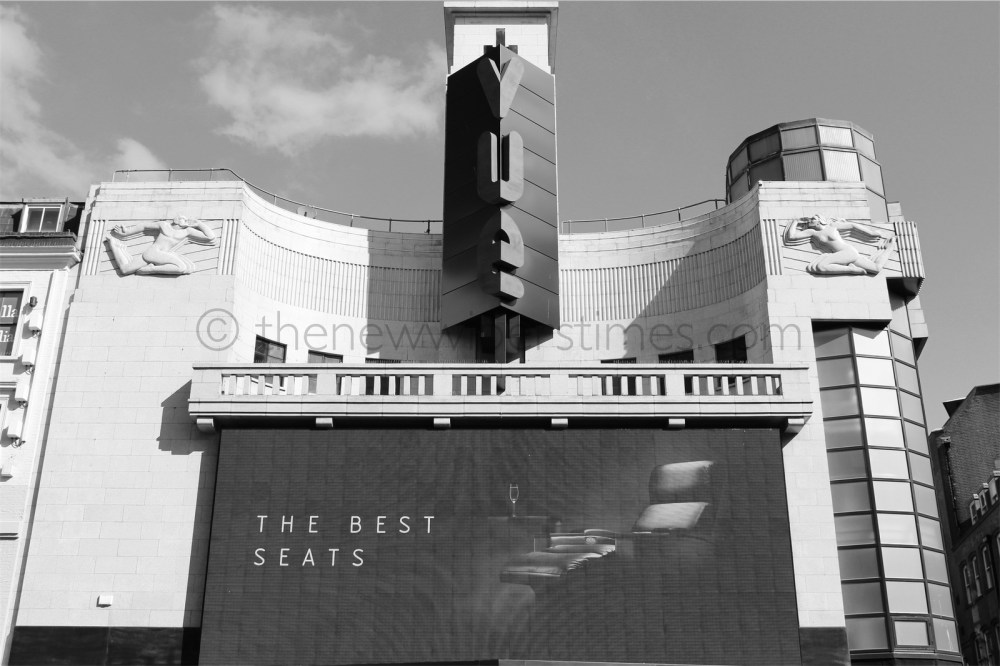
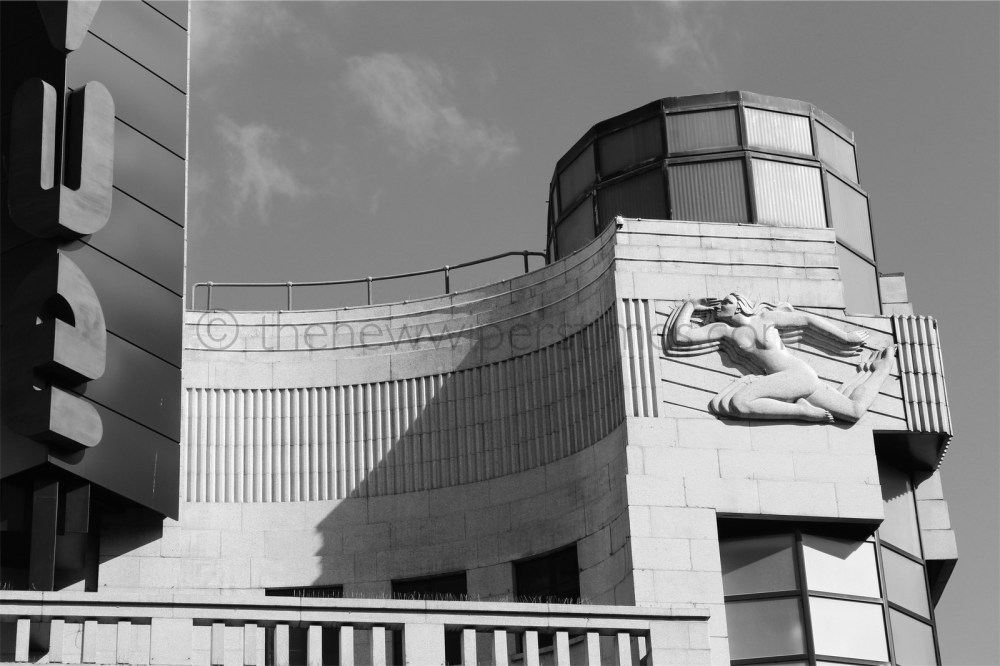
Today’s photographs show the ‘Vue West End’ cinema, which stands on London’s Cranbourn Street, W.C.2, overlooking Leicester Square. Opened in 1938, as the ‘Warner Theatre’, the new single screen cinema was built on the site of an earlier Victorian playhouse, ‘Daly’s’ as “The Home of Warner Bros. Pictures”.
Daly’s, the last theatre in Leicester Square, was acquired by the American film studio in 1937, with the final curtain coming down on ‘No Sleep for the Wicked’ later that same year, on 25 September. The grand Victorian building was then immediately demolished by the firm of Goodman Price, Ltd.
The new ‘Art Deco’ cinema that replaced it was designed by Edward Albert Stone, F.S.I., in association with Thomas Retford Somerford, A.R.I.B.A. Born in Rotherhithe in 1880, Stone was a prolific architect of the interwar period, who specialised in cinemas and theatres, whilst Somerford, born a year later in Kennington is, perhaps best remembered by his work for the Temperance Billiard Hall Co. Ltd.
The pair worked together on several other notable theatre buildings in London including the former ‘Astoria’ cinemas in Brixton and Finsbury Park, both of which are now statutorily listed at Grade II* and Grade II respectively, existing today as the O2 Academy Brixton and the Universal Church of the Kingdom of God (UCKG) HelpCentre.
Construction of the new ‘Warner’ building took exactly a year, with Griggs & Son, Ltd. appointed as general contractors on the scheme. Reinforced concrete foundations were laid by the Trussed Concrete Steel Co., Ltd., on top of which the building’s steel frame was constructed. The girders came from the London firm of Matthew T. Shaw & Sons, Ltd., whose works were in Millwall, E.14.
Managed by Mr W. ‘Bill’ Pepper, previously of the ‘Regal’, Marble Arch, the new 1,775-seat cinema opened its doors to the public on the evening of Wednesday, 12 October, 1938, a little over a year since the closure of Daly’s. The Duke and Duchess of Kent attended the gala opening, in aid of the British Empire Cancer Campaign, which saw the film premiere of ‘The Adventures of Robin Hood’, starring Errol Flynn and Olivia De Havilland.
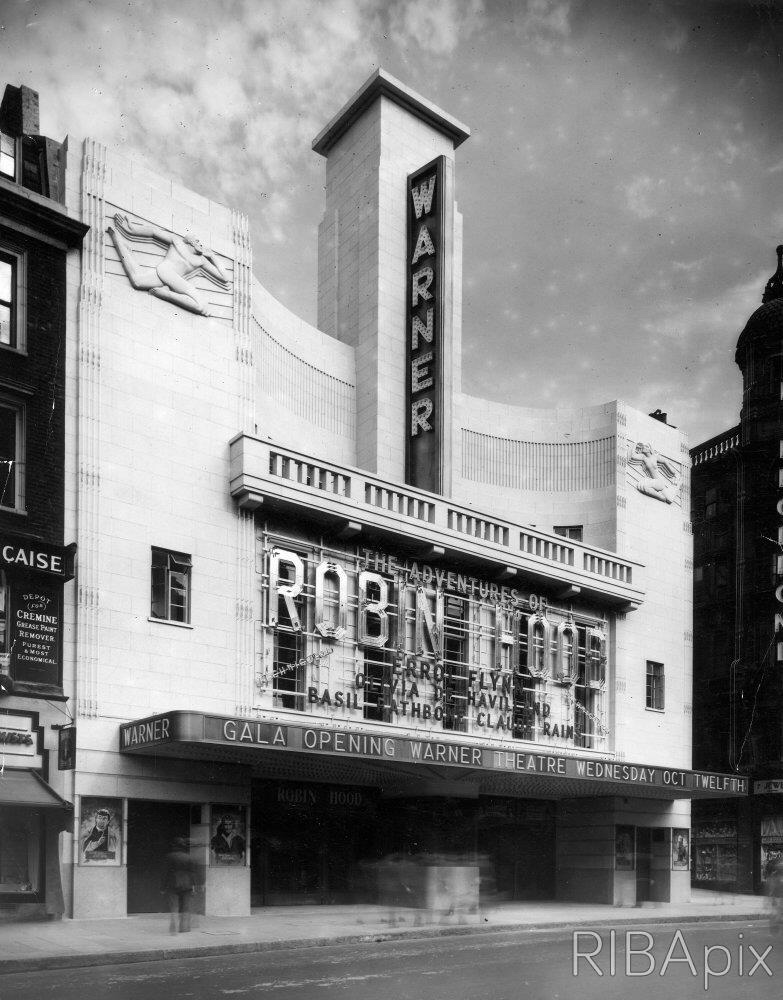
Described by Pevsner as “wildly modernistic”, the principal Cranbourn Street elevation of the ‘Warner’ was faced with reconstructed marble facing blocks from Dunbrik, Ltd., backed with granite concrete and chemically treated so as to preserve their appearance, which more than 80 years later are still in remarkably good condition.
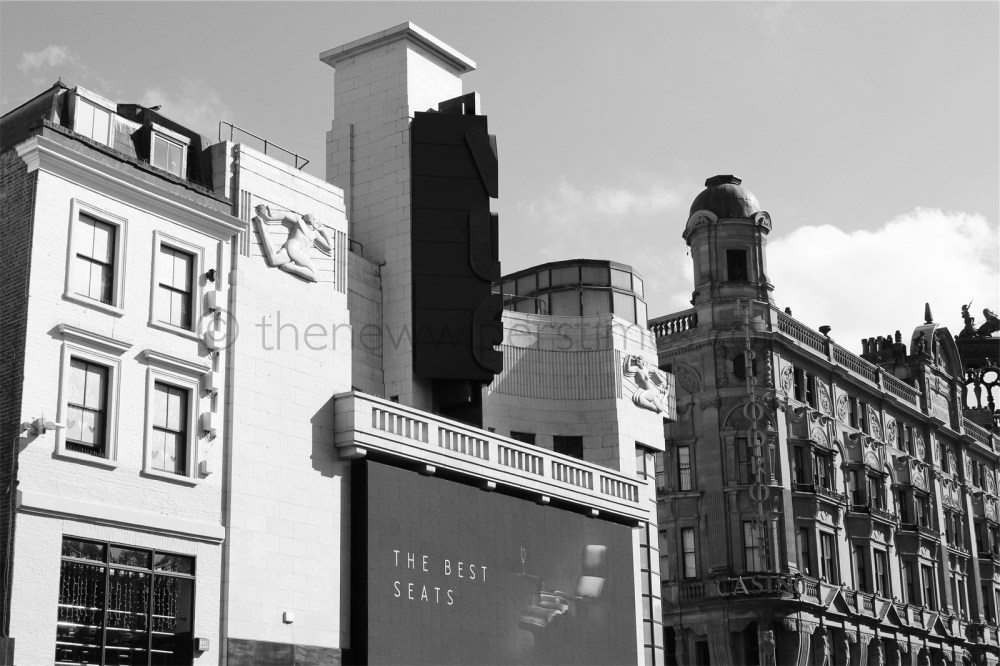
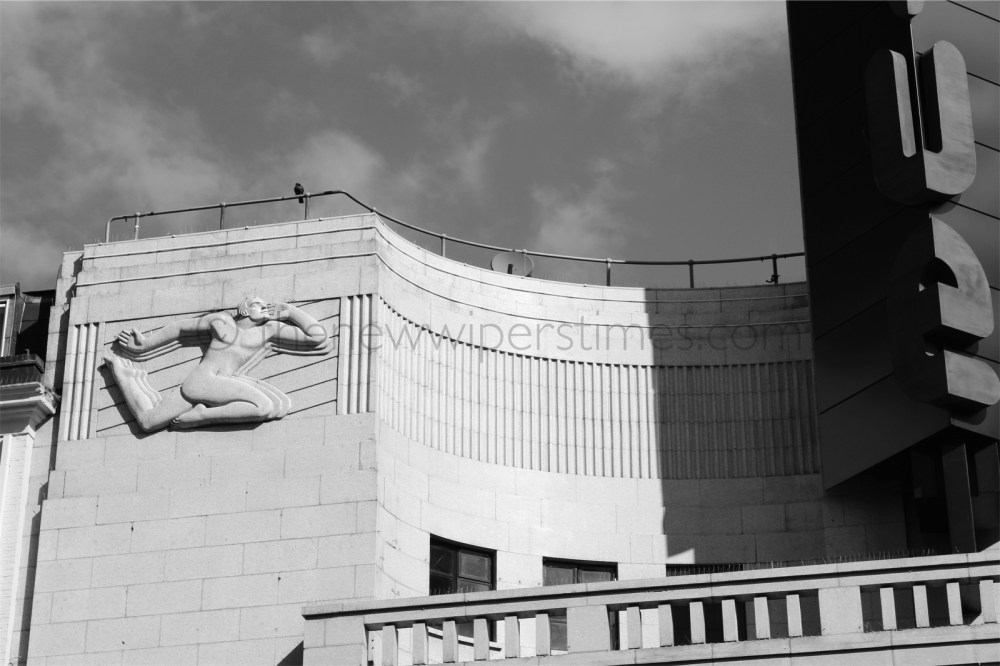
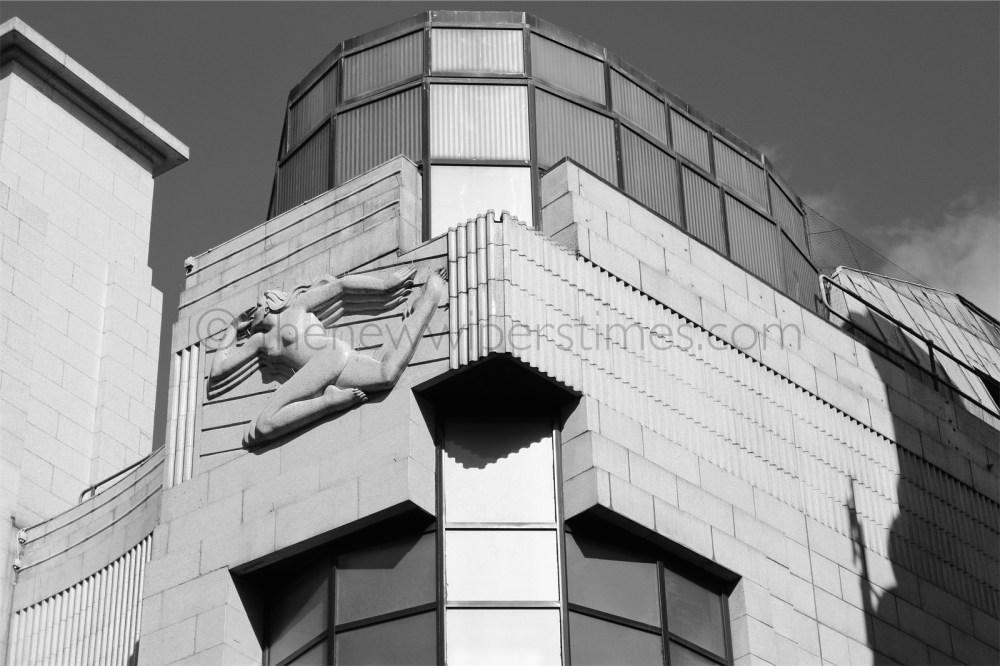
The building is defined by its prominent central pilon, which originally displayed the ‘Warner’ name, and would have competed with the illuminated tower of the nearby ‘Odeon Leicester Square’ for attention. Still visible on the front elevation are two prominent sculptured relief panels, ‘Sight and Sound’, the work of Edward Bainbridge Copnall, M.B.E.
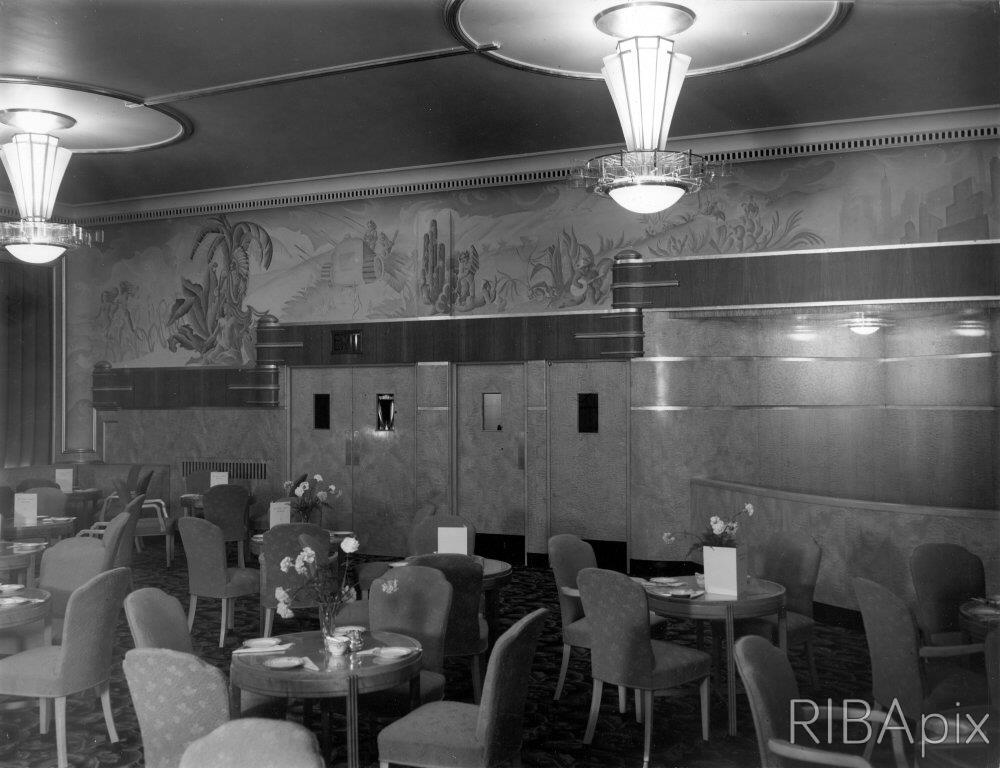
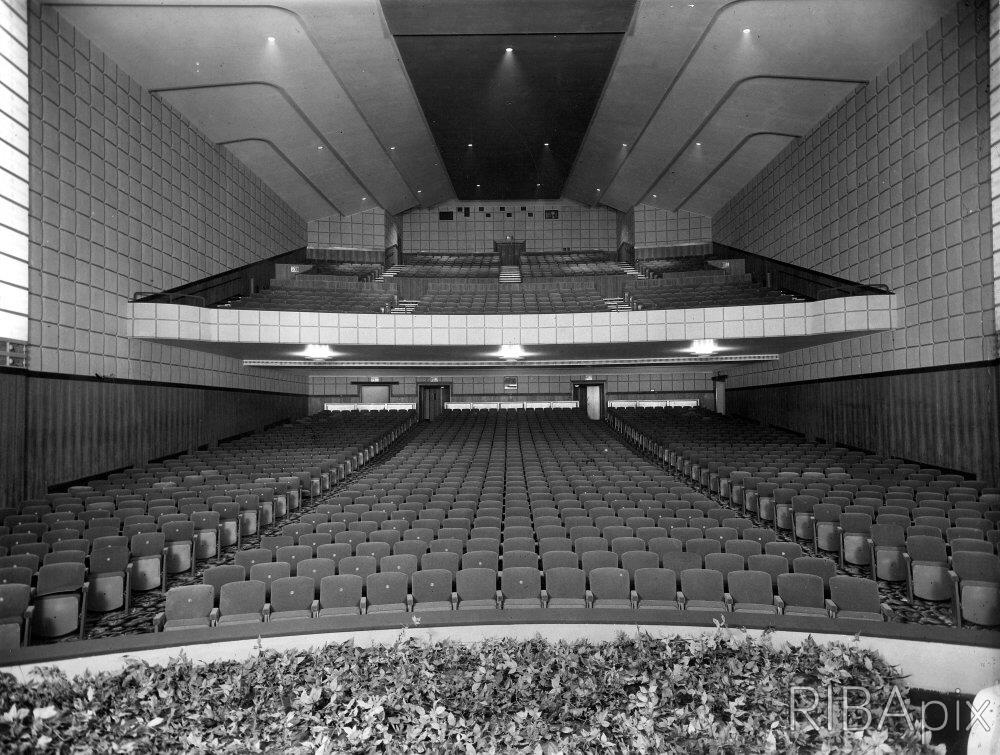
Inside the theatre, Stone and Somerford continued the strong modernist design theme, with ‘The Times’ describing the new interior, which utilised a colour scheme of blue, green and beige, as “remarkably austere and uncompromising”.
The internal walls of the auditorium featured a decorative Empire wood dado, one of eight such woods used throughout the building, with specially woven quilted asbestos panels above. These panels concealed a one inch thick acoustic lining, designed to improve the sound experience for guests.
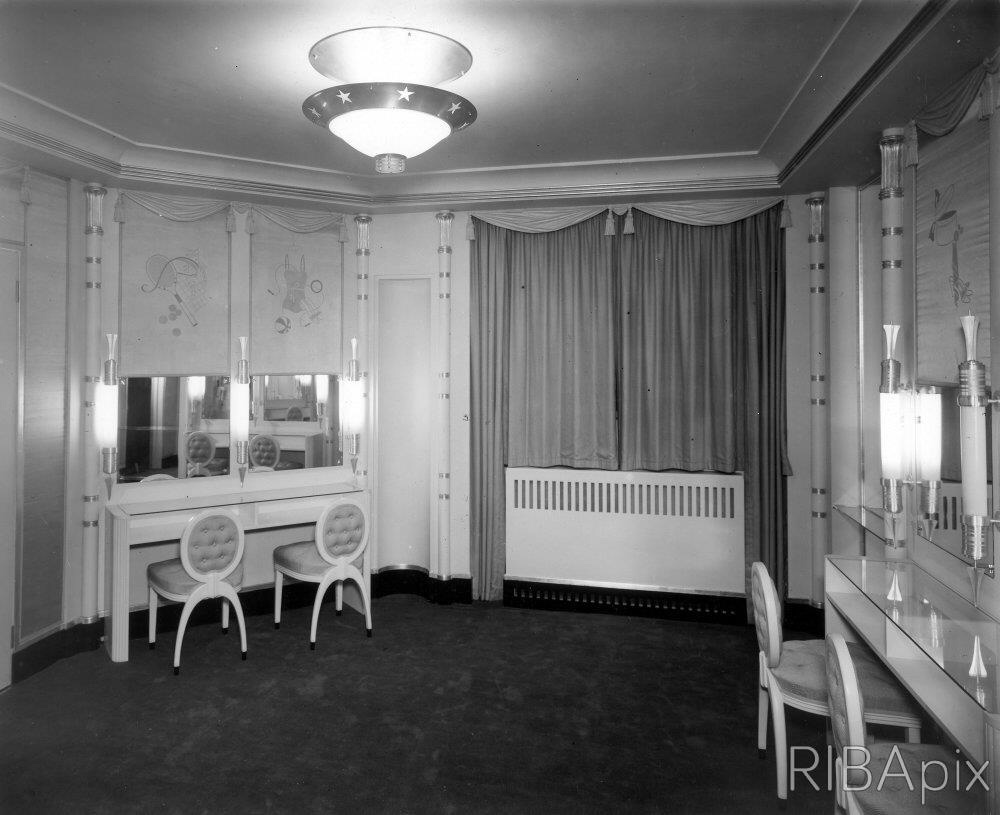
The walls of the foyer and tea rooms at first floor level were finished with a decorative mural by the painter, Beatrice MacDermott, who had previously been commissioned by Sir Julian Cahn in 1937 to paint the murals of his private Stanford Hall Theatre.
The auditorium’s curved false ceiling utilised an innovative new lighting installation for the period, which saw the stalls and balcony below illuminated by concentrated beams of light rather than the traditional wall lights, better known today simply as spotlights. In the large foyer indirect lighting was used.
The ‘Warner’ also featured the customary Compton Theatre Organ, which was supplied by the John Compton Organ Company, Ltd., of Chase Road, North Acton, N.W.10. The order, placed by Warner Bros. in 1937 was one of more than 40 that Compton received that year from new cinemas being built across the UK, including the Odeon, Leicester Square where the original organ still exists today.
With the interior having already been subdivided from the 1970’s onwards and much of the original detail lost as a result, the theatre was effectively demolished in 1991, having closed on 12 September that year. Only the original facade was retained by the architects, HGP Greentree Allchurch Evans, who added a spiral staircase at the corner of the Cranbourn Street and Leicester Place elevations.
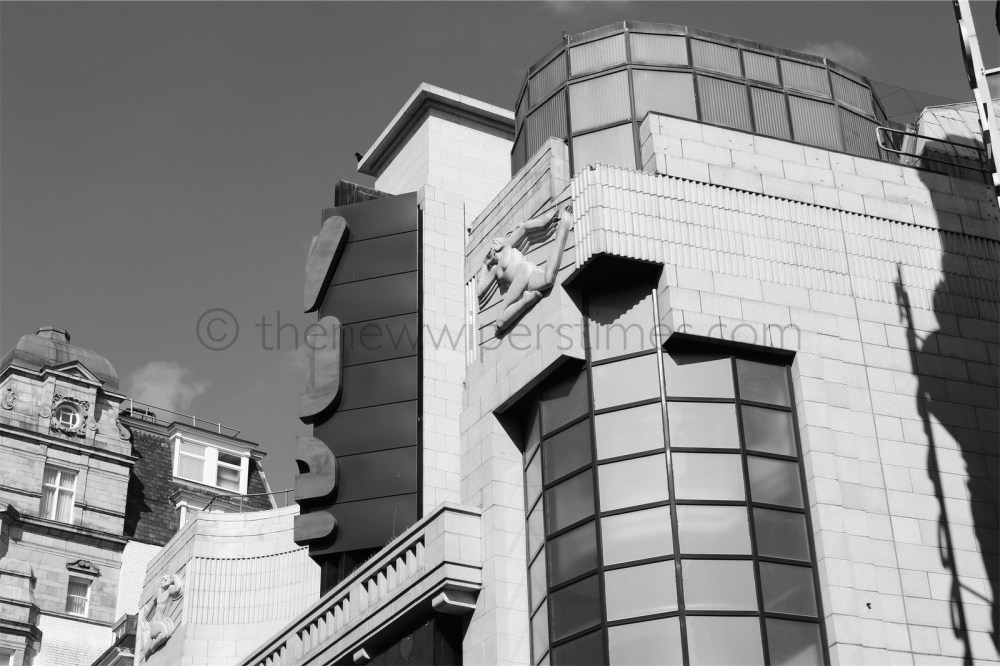
Whilst the addition alters Stone and Somerford’s original design, the work has been done sympathetically and could easily be mistaken for being part of the 1938 building, whilst it is almost impossible to differentiate between the original facing bricks and those that were used to block up several of the original window openings to the front and side of the building.
The new cinema reopened on 23 September, 1993 with a total of nine new auditoriums. The ‘Warner’ is now simply known as the ‘Vue West End’ and acts as Vue Cinemas’ flagship UK property, having reopened once again on 10 July, 2018 following a second £6.6m refurbishment programme, which saw the installation of a 63 sq. m digital screen on the front elevation.
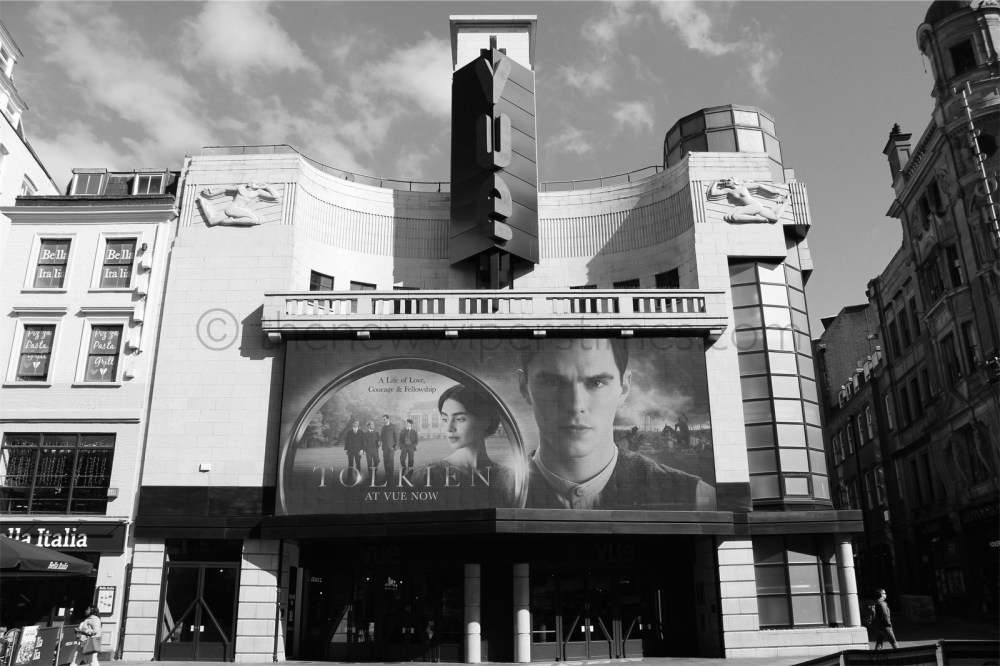
Whilst not entirely original, the whole building could have easily been lost in the 1990’s. Instead, the former ‘Warner’ still stands as a strong example of the ‘Art Deco’ era of supercinemas and is well worth a visit.
May, 2019.
 The New Wipers Times