Built largely during the late-Victorian era, Muswell Hill in North London is not particularly well known for its ‘Art Deco’ architecture, beyond perhaps the former Odeon cinema on Fortis Green Road, which opened in September, 1936 and was the work of George Coles, a prominent architect of the period who was commissioned by Oscar Deutsch to design several Odeon cinemas through the 1930’s.
Recognising its significant contribution to the ‘Art Deco’ era, the building was first listed at Grade II in March, 1984 but has since been raised to Grade II*, with English Heritage rightly recognising ‘the most elaborate interior of any Odeon cinema to survive’. The cinema closed as an Odeon in June, 2015 but has since been beautifully restored, internally at least, by new owners, Everyman Cinemas.
Beyond the Odeon, there are perhaps two blocks of flats that exhibit ‘Art Deco’ design cues, and are therefore worth noting; Dorchester Court and Barrington Court, both standing on Colney Hatch Lane.
The pair, of which Barrington Court is by far the strongest in design terms, have sadly fallen victim to individual leaseholders choosing to replace the original Crittall windows with uPVC alternatives over the years, which has been done in an entirely haphazard way and in turn completely destroyed the uniformity of both blocks in the process.
Beyond a small number of residential homes that express elements of the ‘Art Deco’ period but are of no particular note, there is one final building that deserves further attention; Whitehall Lodge, a block of 36 flats, set back from the road on Page’s Lane, at the junction of Creighton Avenue.
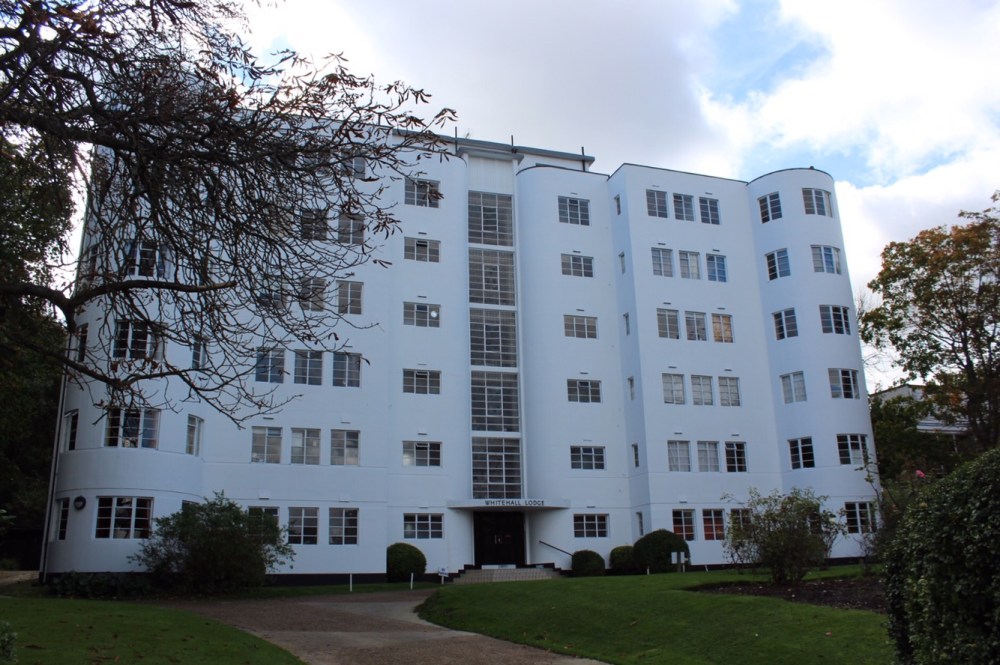
Planning permission for the development was sought by C. B. Smith Esq. of Trafalgar House, 11 Waterloo Place, S.W.1, and granted by Hornsey Borough Council on 22nd September, 1936, with the six-storey, T-shaped block completed in 1938.
An advert in ‘The Times’ on 2nd December, 1938 promoted the new building as being an “half hour from City”, suggesting it was aimed at professionals and specifically those commuting in to the ‘Square Mile’. The advertised “lovely modern flat” offered central heating, constant hot water and a garden, priced from £110 per annum.
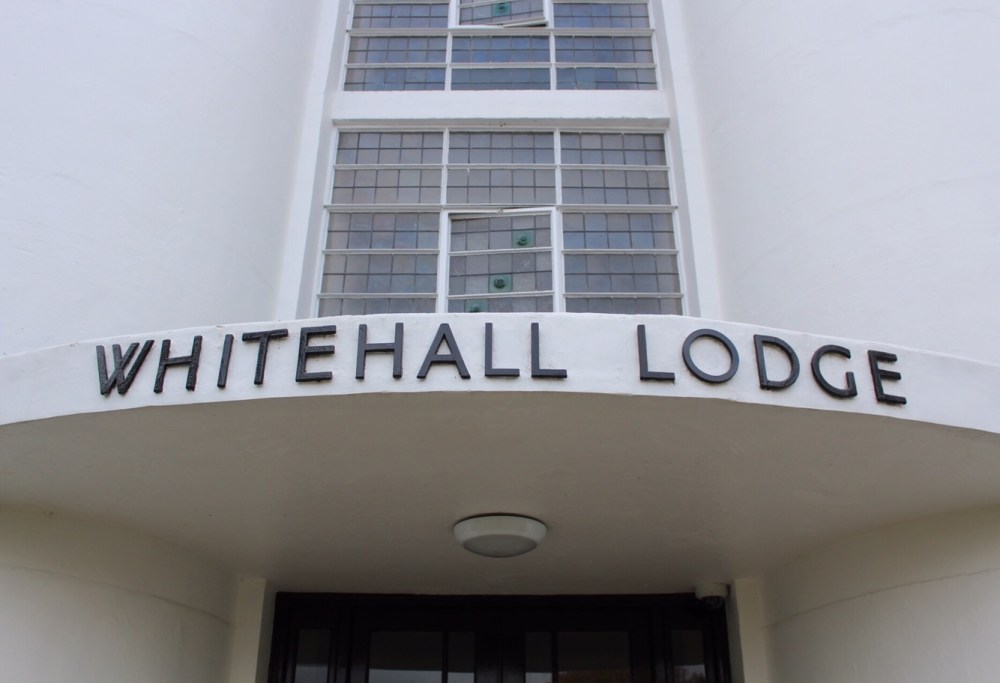
Just two years later, on 13th September, 1940, three weeks in to the aerial bombing of London by the Luftwaffe, the building was being advertised as “safe from bombs”, given its “unique reinforced solid concrete” construction, underlining just how abruptly the era of building luxurious flats and mansion blocks would end.
Unfortunately, I have so far been unable to establish who the building’s architect was, however in September, 1976, Whitehall Lodge was added to Haringey Council’s register of local listed buildings of merit, and still remains almost entirely as-built.
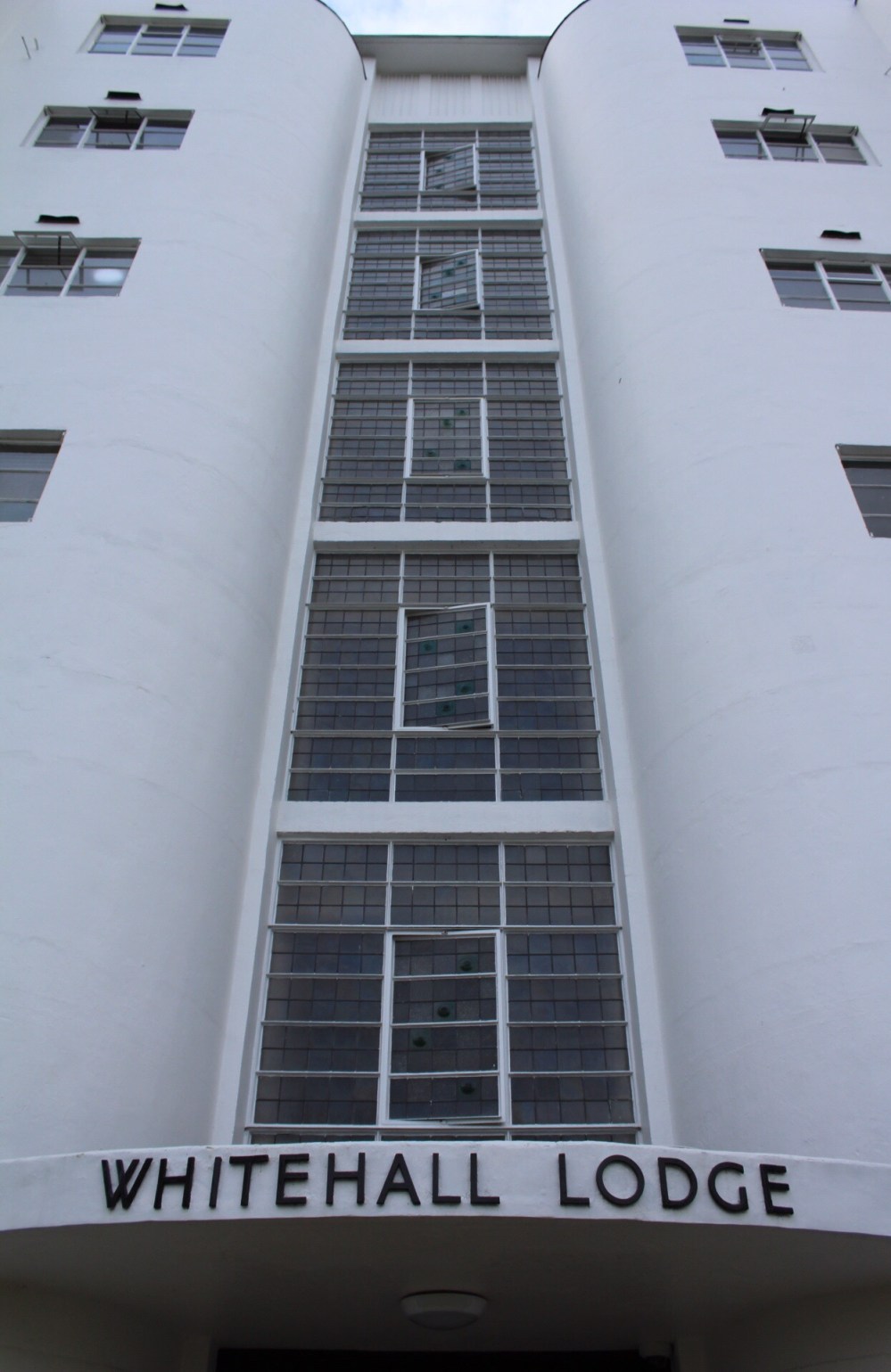
A comprehensive refurbishment in 2016 saw the block repainted in pure brilliant white and some of the original Crittall windows replaced, however in this instance, Clement Windows manufactured near-identical replacements with horizontal glazing bars that are almost impossible to differentiate.
Internally, those flats that have retained their original interiors boast parquet flooring, period doors and fireplaces, whilst the bathrooms are distinctly reminiscent of Charles Holden’s Wood Green station on the Piccadilly Line with cream faience tiles, featuring a black band, with light green capping and skirting tiles.
Pevsner described Whitehall Lodge as ‘tall, white and austere’, which is a suitably honest appraisal. In my opinion, it’s a striking example of ‘Art Deco’ architecture and has been remarkably well preserved, particularly in relation to its peers and given that next year it will be 80 years old.
 The New Wipers Times