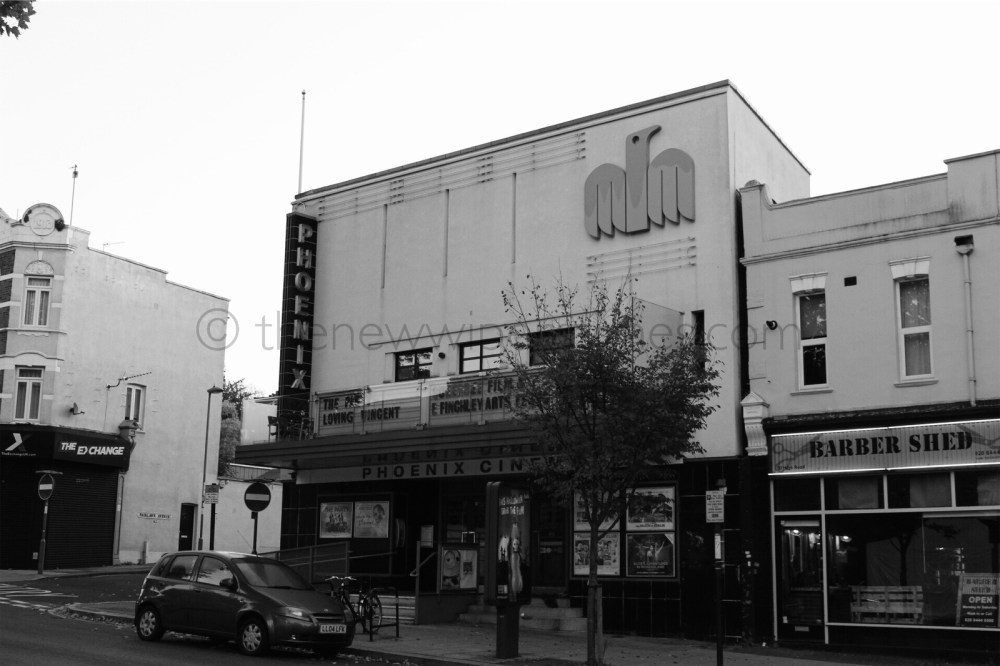
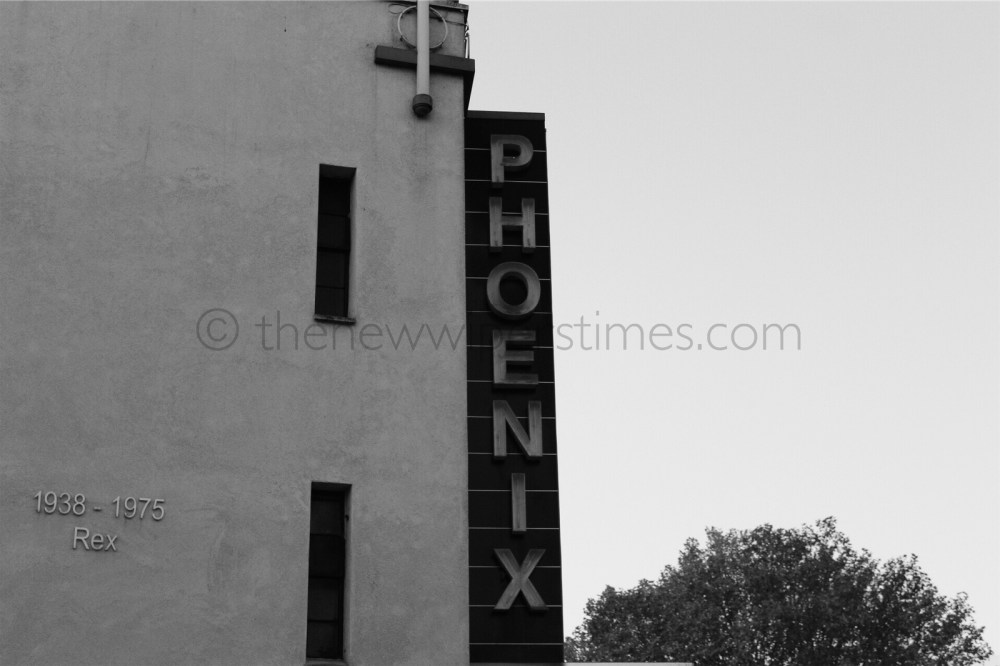
Standing at 52, High Road, East Finchley, N.2., the ‘Phoenix Cinema’ boasts a quite remarkable history of reinvention and survival. It serves as a microcosm of British cinema’s dramatic rise, fall and revival, having first opened in May 1912 as the ‘East Finchley Picturedrome’, before becoming ‘The Colosseum’ in 1924, ‘The Rex’ in 1938 and finally, ‘The Phoenix’ in 1984.

Unlike many of its larger peers, which have long since met with the wrecking ball, this independent, single screen cinema has come through two World Wars unscathed, and successfully navigated through the difficulties of the second half of the 20th century, which saw cinema attendance hit a peak of 1.6 billion admissions in 1946 before declining to just 54 million in 1984 – a 97% drop!
Living up to its name and having risen from the industry ashes in 1984, the ‘Phoenix’ is now one of the oldest purpose-built cinemas in the UK, claiming more than 107 years of near-continuous operation, closing only for the various redevelopment and refurbishment programmes outlined above. Today it’s run as a successful not-for-profit, operated by the charitable Phoenix Cinema Trust.
The current building retains much of its ‘Art Deco’ design, both inside and out, and remains a clear architectural reflection of the 1930’s, an undoubted golden age for British cinema design.

It was also a decade that saw the competitive landscape change significantly with the arrival of new super-cinemas, built by the increasingly dominant, large national chains; Associated British Cinemas (ABC); Gaumont; and Odeon.
In direct competition with ‘The Colosseum’, by then an out-of-date, Edwardian cinema that could seat just 522 people, new cinemas sprung up in both neighbouring Muswell Hill and across Finchley itself.
The first of the big new competitors was Oscar Deutsch’s Odeon, which opened in North Finchley, in October, 1935 to a design by Arthur Percival Starkey and boasted 1,296 seats.
That was followed soon after by the Muswell Hill Odeon, designed by leading cinema architect, George Coles and opened on 9 September, 1936, with 1,872 seats.

Right around the corner and ABC built the 1,997-seat Ritz on Muswell Hill itself, which opened on 21 December, 1936.
Finally, in July 1937, Gaumont opened the biggest cinema of the lot, at Tally Ho Corner in North Finchley, with 2,167 seats.
To fend off this new competition, on 3 January, 1938, ‘The Colosseum’ closed its doors for a major redevelopment. The cinema’s owners appointed Messrs. Howes & Jackman, FF.R.I.B.A., as architects to design a new ‘Art Deco’ facade, which took its design cues from the new chains, in particular making extensive use of black faience tiles, as per the Muswell Hill Odeon, sourced from the Shaws Glazed Brick Co.

Messrs. E. A. Roome & Co., Ltd., appointed as general contractors, took just eight weeks to complete the works, which saw the exterior altered in its entirety, with a stone plaster finish from Modern Finishes, Ltd.
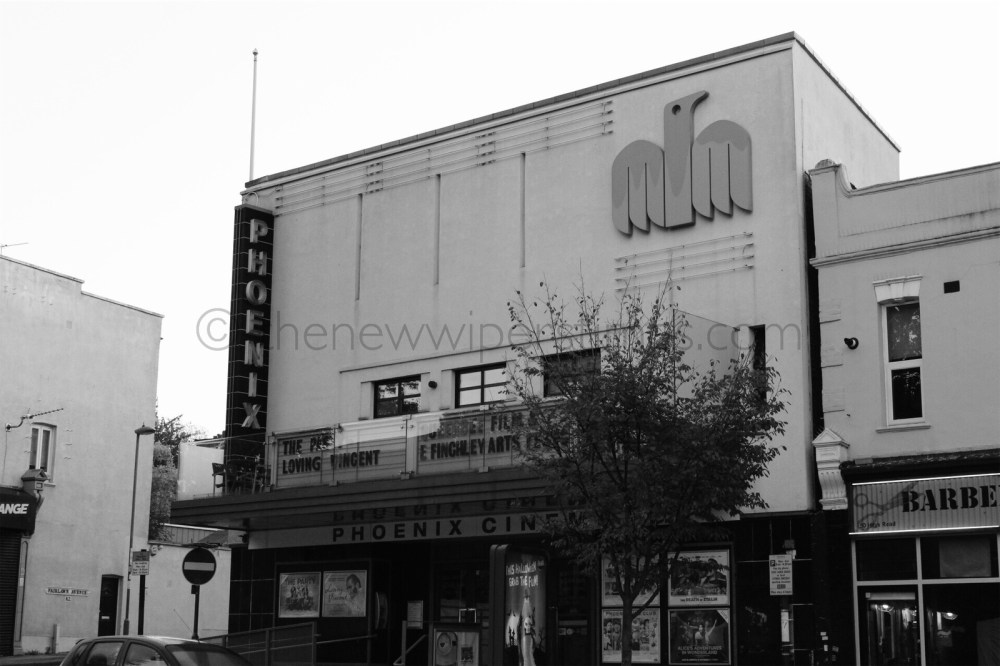
The “new” cinema reopened as the 549-seat ‘Rex’ on 12 September, 1938, a quite remarkable achievement considering the amount of work involved.
Of the competition, the North Finchley Odeon was the first to close in 1964, becoming a furniture sales room before the vastly altered building was finally demolished in 2013 to make way for flats.
The Ritz in Muswell Hill went next, closing in 1978 to be immediately demolished and replaced by an office block, which has itself now been converted to flats.
The last to go was The Gaumont, which closed in 1980 before being demolished in 1987.
The sole survivor among the big four has been the Muswell Hill Odeon, which thankfully became a Grade II* listed building on 6 March, 1984.
The ‘Art Deco’ cinema has since been beautifully restored by the Everyman Media Group plc, which announced the acquisition of the North London site from Odeon Cinemas Ltd., on 20 April, 2015.

Ironically, the revitalised site in Muswell Hill, which along with the ‘New Victoria’ cinema on Wilton Road, S.W.1, boasts one of the best-preserved cinema interiors of the modernist design era, has likely put increased pressure on attendance at the nearby Phoenix, which has since endured several recent years of unprofitable trading.
Faced with the very real risk of insolvency, on 2 November, 2018, the Phoenix Cinema Trust, which runs the East Finchley site confirmed that it had abandoned plans to enter in to a potential partnership with Curzon Cinemas that would have seen the larger independent cinema group take over the programming operations of the Phoenix, on behalf of the Trust.
The Trust has since doubled down on its fundraising efforts, yet despite a list of patrons that includes Benedict Cumberbatch, Dame Judi Dench, Maureen Lipman and Ken Loach among many others, the future of the Phoenix Cinema, sadly looks far from certain at this stage.
May, 2019.
 The New Wipers Times